
Reviews
Ceiling Dash succeeds by focusing on one core idea and executing it well. The gravity flip mechanic is simple to understand but difficult to master, offering a steady challenge that rewards practice. The track design progressively introduces new hazards like moving blocks, keeping the gameplay engaging without becoming chaotic. Local multiplayer for up to six players adds a social layer that extends replay value. The clean visuals and responsive controls ensure that every failure feels like a learning opportunity rather than a frustration. For players who enjoy pure reflex-based platformers, Ceiling Dash delivers a polished and focused experience.
Description
Core Gameplay Loop
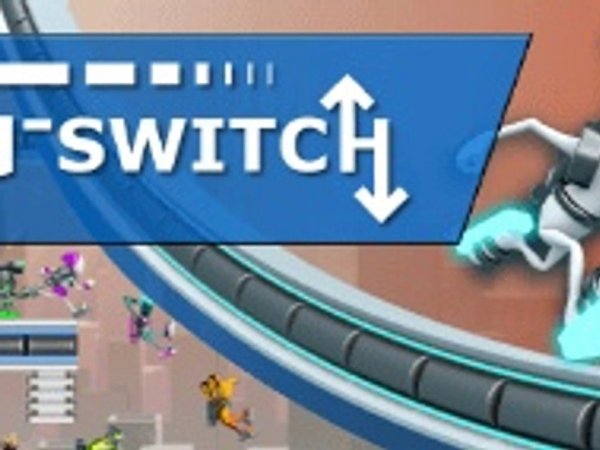
Ceiling Dash centers on a simple but demanding mechanic: a single tap flips your runner from the ground to the ceiling and back. This reversal of perspective forces you to constantly re-evaluate the track ahead. Obstacles that were once on the floor become hazards from above, and gaps require a well-timed switch to cross. The game rewards players who can maintain a steady rhythm and adapt quickly to changing layouts.
Track Design and Hazards
Each course in Ceiling Dash presents a unique arrangement of barriers and pathways. Early tracks introduce basic gaps and low walls, teaching the fundamentals of gravity switching. Later stages incorporate moving blocks that shift positions, requiring anticipation rather than simple reaction. Narrow sections demand precise control, as even a slight mistimed flip can send the runner off the track. The variety keeps the experience fresh without overwhelming new players.
Competition Modes
Beyond solo play, Ceiling Dash includes a local multiplayer mode where up to six players compete on the same device. Each player takes turns running the same track, with the goal of surviving the longest or completing the course in the fewest attempts. This format encourages friendly rivalry and lets players learn from watching others. The mode works well for gatherings or quick sessions with friends.
Controls and Responsiveness
The control scheme is intentionally minimal, relying on a single input for gravity flips. This simplicity lets players focus entirely on timing and track awareness. The game responds instantly to each tap, with no noticeable delay. This responsiveness is critical for navigating tight spaces and avoiding last-second hazards. Players who practice can develop a feel for the exact moment needed to clear each obstacle.
Progression and Challenge
Ceiling Dash does not rely on power-ups or complex upgrades. Instead, difficulty increases through track complexity and hazard density. Players advance by improving their own reflexes and learning the layout of each course. There are no random elements, so success comes from practice and pattern recognition. This design appeals to those who enjoy mastering a skill through repetition.
Accessibility and Availability
The game is designed to run on various platforms and includes an unblocked version that works on restricted networks, such as those in schools or offices. This makes it easy to play during short breaks or in environments where game sites are often blocked. The low system requirements mean it runs smoothly on older hardware as well.






Comments
Sign in to comment
You must be logged in before posting a review or rating.
No account? Create one
No comments yet. Be the first to comment!